

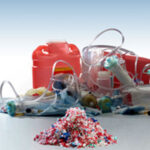

Hospital waste management
The WHO classification of waste materials from health and medical centers and hospitals is general waste and hospital waste. Also, in another category, types of waste can be separated based on the source of production, including special hospital waste, kitchen waste, and quasi-household waste. The classification of all types of waste was implemented in the cancer institute as a pilot and widely during the years 1385 to 1387, but unfortunately it failed due to many problems including the lack of funds.
It is necessary to classify and separate hospital wastes: from the health, environmental, economic and technical aspects to raise the level of community health and prevent the transmission of hospital infections. Increasing the health level of the society comes from the greater awareness of the people in the society and follow-up in the living environment. The need to separate hospital waste from other waste is the most important.. If the hospital waste that is considered infectious is not separated from other general waste and not disposed of separately, the society will suffer from infectious risks and a capital like dirty gold will be removed from the return of expenses.
Conclusion: In general, in the obtained results, the following problems have been identified in hospital waste management:
A- In the current structure of the institutions responsible for hospital waste management, the roles and responsibilities are not clear and no institution performs overall control of hospital waste management. The lack of an integrated management system has caused the lack of management priorities, lack of executive guidance and reduced efficiency.
B- The guidelines and regulations of the Ministry of Health, Treatment and Medical Education regarding the management of hospital waste are used in all investigated units, and many efforts have been made by the Ministry of Health, the universities responsible for the supervision of hospitals and the municipality to train the employees. Hospitals have taken place. Despite this, the trainings are generally exclusive to hospital service managers and the service personnel are facing a lack of proper training.On the other hand, due to the transportation and final disposal of mixed waste by the municipality, the employees do not have the necessary motivation to separate the waste.
C- The quality of hospital waste management services is degraded both through producers and service providers. Improving the existing system in Tehran includes improving the quality of collection and disposal services as well as separating hospital waste from its source.But until the quality of urban management services is not improved, hospitals will not make an effort to manage hospital waste.
D- The problem of private hospitals to provide the necessary funds for the provision of waste disposal technologies makes it difficult for them to dispose of waste in the hospital.
E- In a general summary, the hospital waste management process in the territory of the hospital and in the axes of separation, collection and transportation from the departments and temporary storage is evaluated well. But in the axis of transportation outside the hospital, the final disposal of waste is not under the control of the hospital, such as the lack of proper interaction between the MESO agencies in the field of providing suitable facilities and equipment and not developing standards and executive regulations is evaluated as weak and moderate.


بدون دیدگاه